Starting With the Question Most of Us Avoid
I’ve been around boats long enough to know this isn’t a comfortable topic—but it’s one we can’t keep sidestepping.
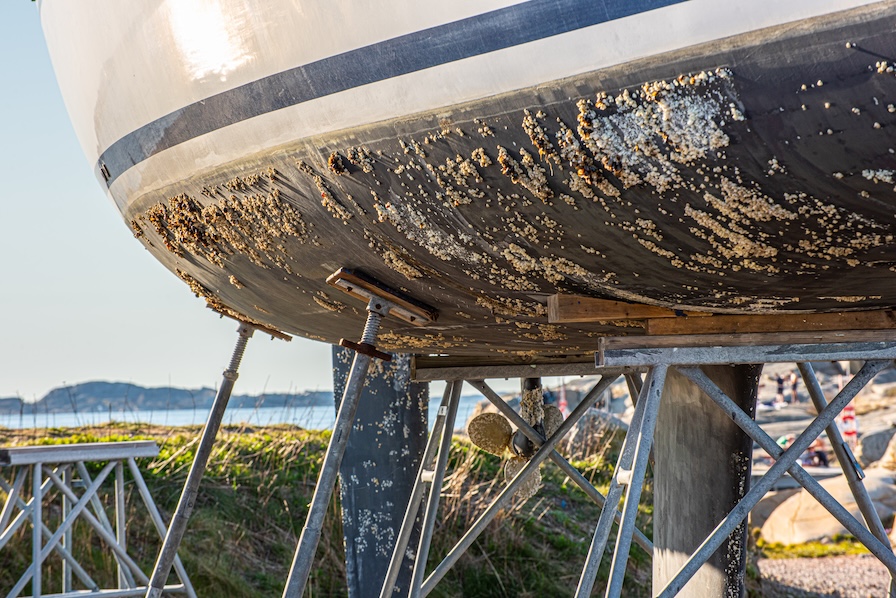
Every time a traditionally antifouled hull is pressure washed, you can see exactly what’s happening. Paint, biocides, and residue going straight into the water or onto the yard floor.
We’ve accepted that for years as part of boating.
The real question is—should we still be?
That’s what led me to Coppercoat. Not as a trend, but as a response to a system that no longer serves boat owners or the environment.
Moving Beyond the Annual Cycle
Traditional antifoul is designed to erode. That means from the moment it goes on, you’re already committed to doing it again.
At the same time, regulations have reduced the strength of many coatings, which has led to more frequent applications—not fewer.
So the cycle becomes unavoidable:
More applications.More cost.More material entering the environment.
Coppercoat was developed to step outside that loop.
It’s a high-copper epoxy system applied once, forming a long-term surface that doesn’t wear away in the same way. From that point on, maintenance shifts from repainting to simply cleaning when needed.
The Maintenance Shift Owners Actually Feel
The environmental argument starts the conversation—but it’s the practical side that convinces people.
What changes is straightforward.
You’re no longer planning your season around antifouling.You’re not waiting on yard schedules or weather windows.You’re not repeating the same job every year.
Instead, it becomes:
Lift. Wash. Relaunch.
In UK waters, it’s common to see 10–15 years of service life , with many owners feeling they’ve offset the initial cost within a couple of seasons .
But the real gain is consistency. Less disruption. More time using the boat.
Proven Under Pressure: The Clipper Race Example
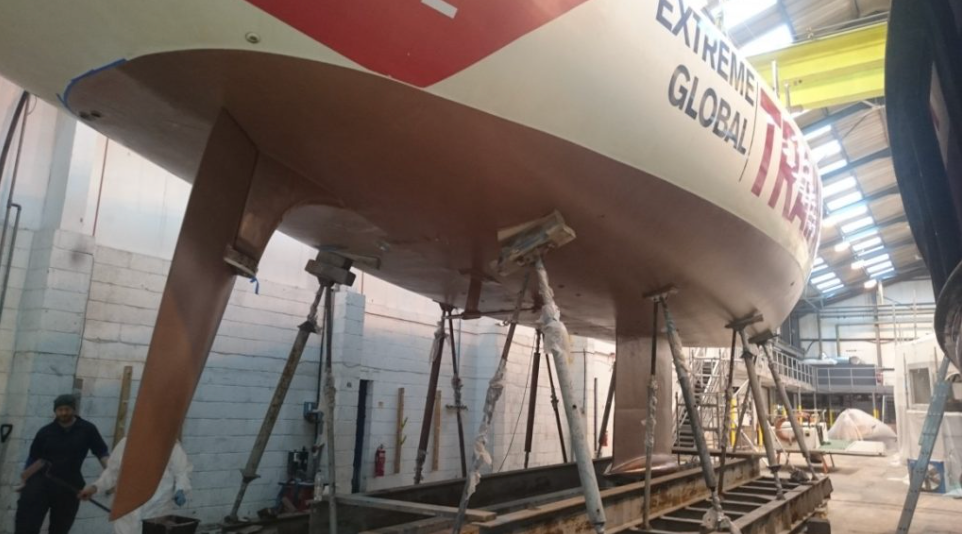
A clear real-world example is the Clipper Round the World Yacht Race fleet.
Previously, each boat would be antifouled twice per race—before the start and again mid-race. That meant repeated haul-outs, cost, and significant logistical effort.
Since switching to Coppercoat, those boats have run multiple races on a single application .
The financial outcome is hard to ignore.
An additional upfront cost of around £15,000 delivered savings of roughly £252,000 across four race cycles .
But the bigger impact was operational.
No mid-race haul-outs.No re-rigging.No disruption to race schedules.
And alongside that, improved performance over distance.
Where It’s Being Used
This isn’t niche.
It’s already being specified by builders across the market.
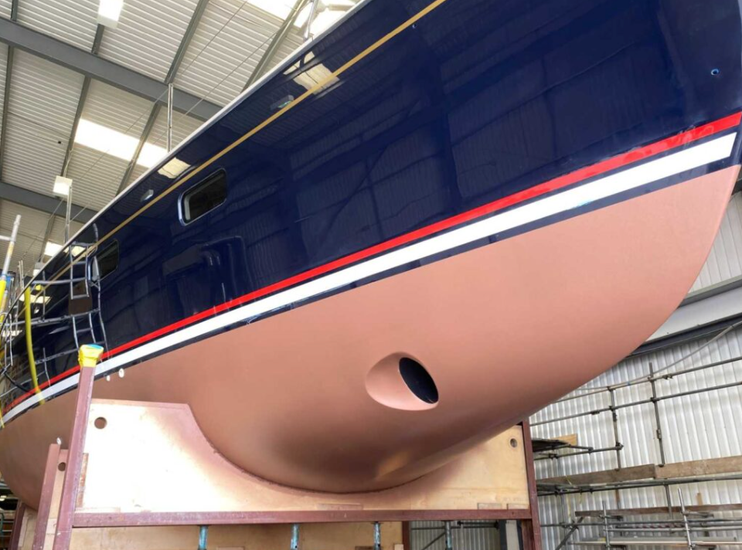
Ribeye and Cornish Crabbers use it on smaller craft where simplicity and performance matter.
At the other end, it’s seen on yachts from Oyster Yachts and Solaris Yachts.
Different boats, same objective: reduce maintenance and maintain a consistent hull over time.
A More Stable Surface
Because Coppercoat doesn’t build up in layers or absorb water, the hull surface remains consistent.
There’s no gradual thickening of coatings, no changing profile year on year—just a stable surface that performs predictably.
Being Straight About the Process
This isn’t a shortcut.
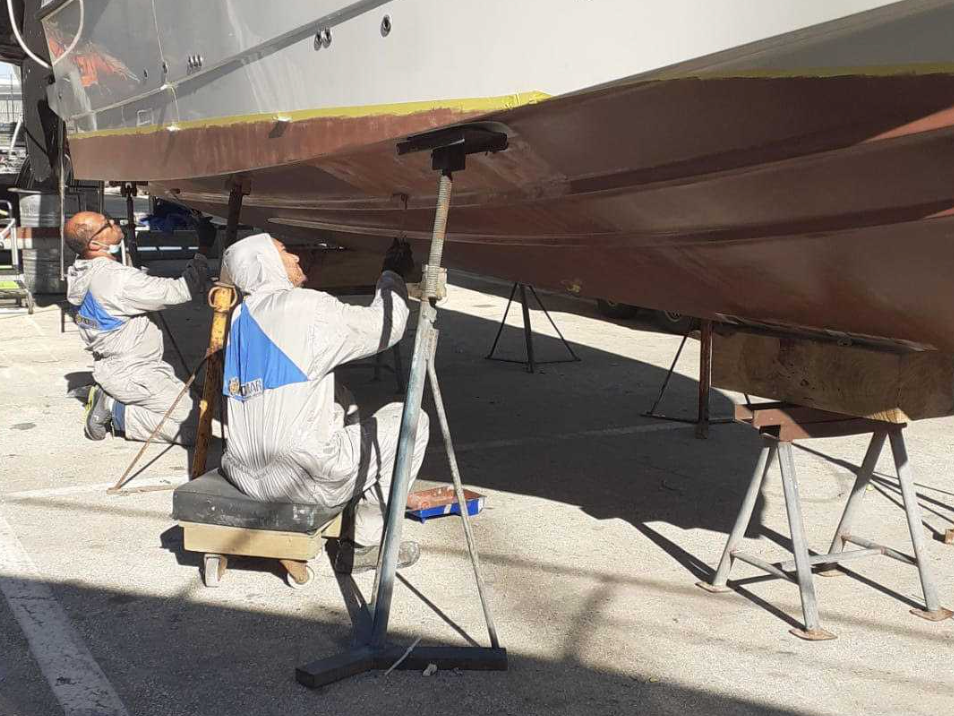
Existing antifoul needs to be removed properly.The surface needs correct preparation.Application has to be done in the right conditions—and completed in one go.
That’s where the commitment sits.
Get that stage right, and the maintenance model changes completely.
From a Brokerage Perspective
From a resale point of view, it’s a quiet advantage.
A Coppercoated hull represents fewer future jobs, fewer unknowns, and less immediate cost for the next owner.
It won’t always transform the price—but it often steers the decision.
The Bottom Line
For me, this isn’t just about antifoul anymore.
It’s about whether you continue with a system that requires repeated intervention—or move to one that removes the problem altogether.
Coppercoat isn’t new. It’s not experimental. It’s already proven across thousands of boats, from small craft through to global race fleets.
The difference is simply this:
You can keep managing antifoul every season…or deal with it properly once and move on.
If you want to understand how it works in more detail, including application guidance and real-world case studies, you can explore more at Coppercoat’s official website here

About Jayson Kenny
Jayson Kenny co-founded Aquarius Marine Coatings Ltd, manufacturers of Coppercoat, over 30 years ago. He first worked with the product on his father’s boat in the early 1990s, and has since built an in-depth understanding of marine coatings and the need for long-lasting, low maintenance, and environmentally responsible solutions to protect the oceans.