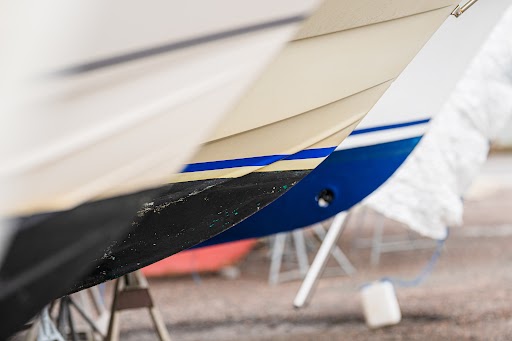
Choosing the Right Boatyard for Winter Ashore
Choosing a boatyard to take your boat ashore for winter maintenance is often treated as a simple logistics exercise: find the nearest hoist, book a slot, job done.
In reality, it’s one of the most consequential decisions you’ll make all year.
The right yard sets you up for a smooth spring launch, controlled costs, and fewer maintenance surprises. The wrong one introduces delays, compromises and creeping bills that only surface once the boat is already ashore. Across the UK, boatyards vary enormously in capability, access, infrastructure and environmental standards. Assuming they’re all broadly the same is an expensive mistake.
This is a practical guide to choosing a yard that actually works for you and your boat.
Location matters — but access matters more
A nearby yard is only convenient if it can reliably handle your boat.
Many UK yards are tidal. Some operate within very tight haul-out windows. Others have beam or draft limitations that only become apparent at the last minute. A yard that looks ideal on a map but regularly cancels lifts due to weather or tide may not align with your schedule.
What you want is predictability: a lift operation that works in marginal conditions, has contingency built in, and isn’t thrown off course by a typical December forecast. Convenience only counts when reliability is part of the package.
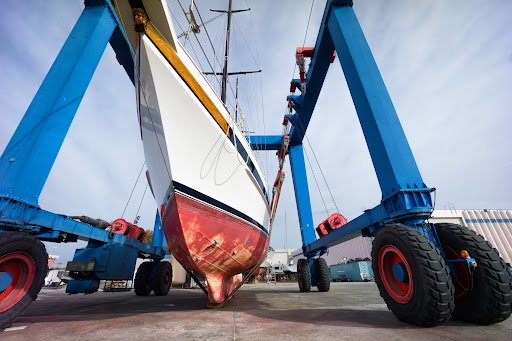
Lift capability is not just a headline number
Most yards will quote their lifting capacity. Fewer will volunteer the condition of the machinery or the experience of the team using it.
Before committing, you should know:
- The yard’s Safe Working Load (SWL)
- Maximum beam and draft limits
- Sling condition and inspection regime
- Age and maintenance standard of the lifting gear
A phone call isn’t enough. Visit the yard. Watch boats being lifted. Look at the slings. Observe how boats are chocked and supported ashore. Are cradles adjusted for hull shape, or is every boat blocked the same way regardless? Competent yards adapt their setup boat by boat.
Hardstanding quality makes a real difference
UK winters are unforgiving. Rain, frost and wind quickly expose weak infrastructure.
Good yards invest in:
- Solid, well-drained hardstanding
- Proper keel blocks or purpose-built cradles
- Safe access even in poor weather
If the ground turns to mud by February, that yard isn’t protecting your investment, no matter how competitive the price looked in October.
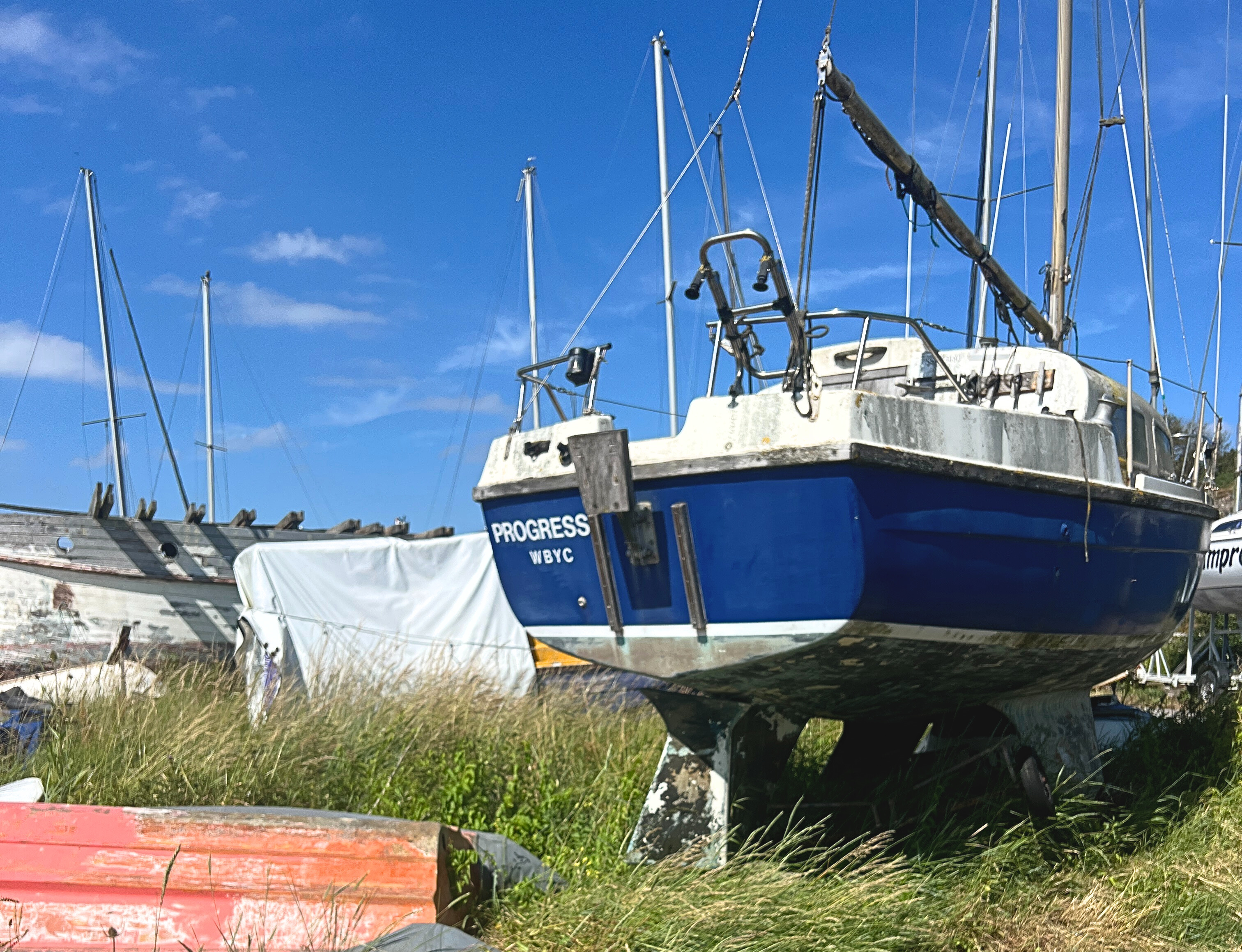
Understand how the yard operates
Winter ashore is the best opportunity to get ahead on maintenance: servicing, antifoul, polishing, deck work, inspections and upgrades.
Yards generally fall into three categories:
- Open yards, where you can use your own contractors
- Closed yards, where all work must be done in-house
- Hybrid yards with approved contractor lists
None of these models are inherently wrong, but the right choice depends on the work you actually want done. Choose a yard that supports your plan, not one that forces compromises because of restrictive policies, particularly if you are looking to tent the boat for blasting or extensive sanding.
Security and access are not standard
This catches owners out every year.
Some yards restrict access during winter. Some close early. Some shut off water and power until spring. Others limit access during storms or high winds.
If you intend to do any DIY work or check on the boat mid-winter, confirm:
- Opening hours and winter access rules
- Security cover and lighting
- Availability of electricity and water
A secure, well-lit site with sensible access is worth paying for.
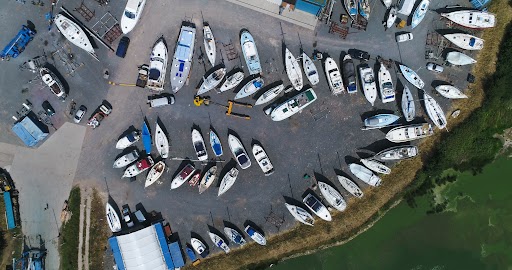
Get clarity on costs upfront
Boatyard pricing is rarely simple. Charges are often split across:
- Lift-out and relaunch
- Pressure washing
- Storage (by LOA or square metre)
- Cradle or block hire
- Environmental or harbour levies
Ask for a full winter package price so you can compare like-for-like. A cheap lift can easily be offset by expensive storage or add-ons that weren’t obvious at the outset.
Sort insurance and compliance early
Most yards require proof of third-party liability insurance before lifting. Using your own cradle may require additional declarations. Deal with this well in advance. Last-minute paperwork delays create unnecessary pressure around tidal windows and lift schedules.
Environmental standards now matter
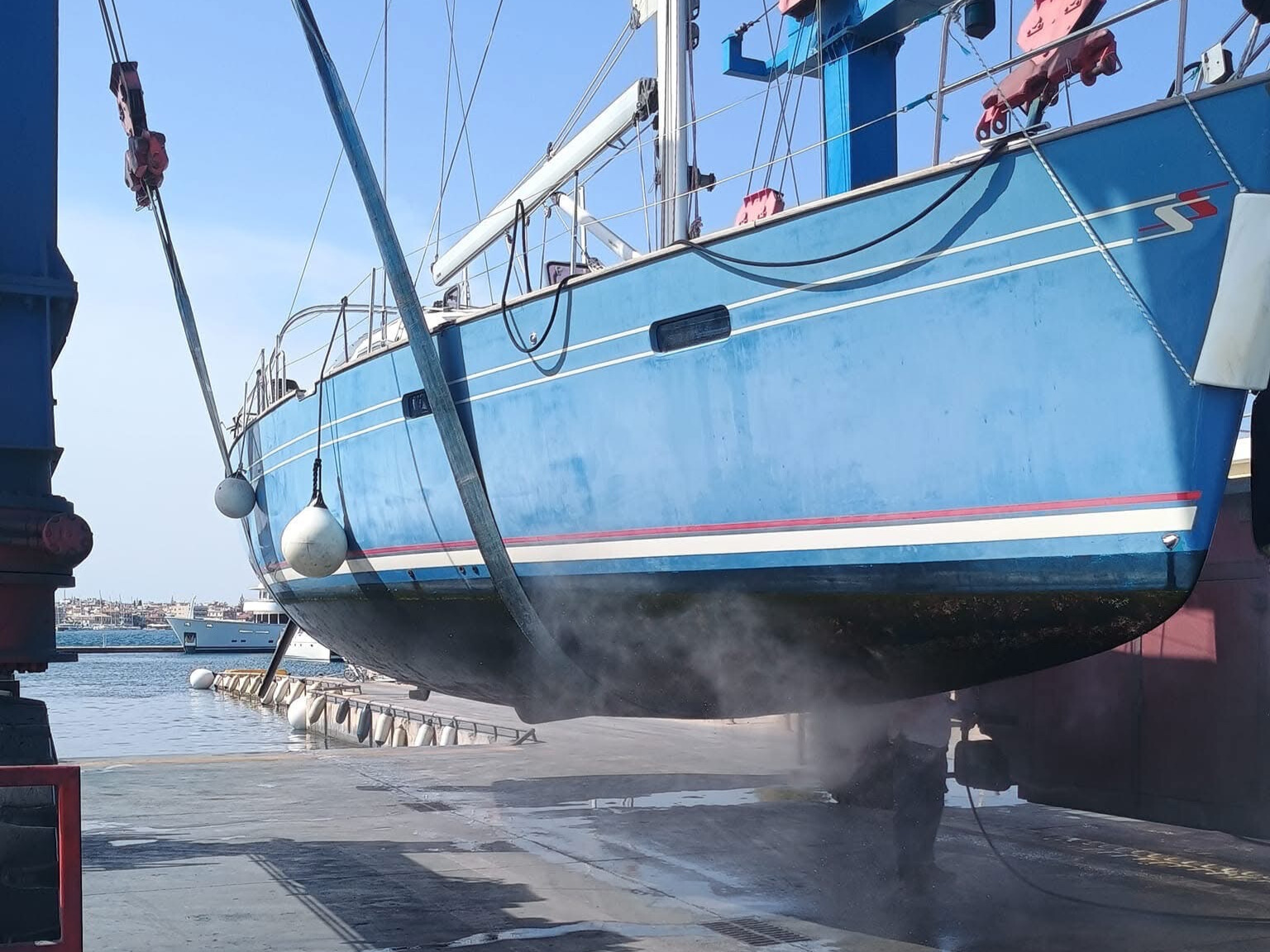
Environmental compliance is no longer a “nice to have”. Many UK harbours are tightening controls on wash-down waste, antifoul debris and copper discharge.
Better yards invest in:
- Closed-loop wash-down or interceptor systems
- Proper waste handling
- Clear, visible compliance procedures
This isn’t just about regulation. It protects the harbour, the boat, and increasingly the story you’re telling when it comes time to sell.
Reputation still counts
A good yard feels busy but organised. Boats move regularly. Contractors know the systems. Customers come back year after year.
If a yard looks deserted in November, pay attention. That’s rarely a positive sign.
Takeaways
Choosing a winter boatyard influences everything that follows: commissioning timelines, maintenance quality, overall costs and your own sanity.
Pick a yard that is operationally solid, environmentally responsible and aligned with how you want to look after your boat. That’s how you protect the season ahead, not just get through winter.

About Claire Lindquist
Owner and creator of True North Yachts with a passion for getting people out on the water safely. I have sailed as a liveaboard, a cruiser and a racer, from dinghies to bluewater yachts. I have technical background in the industry and a curiosity for boating innovations as well as an appreciation for classic crafts. When ashore you'll find me in boatyards, usually up a mast or crammed into an engine room. Away from boats, I recharge with coastal walks which keeps me grounded and always connected to the sea.