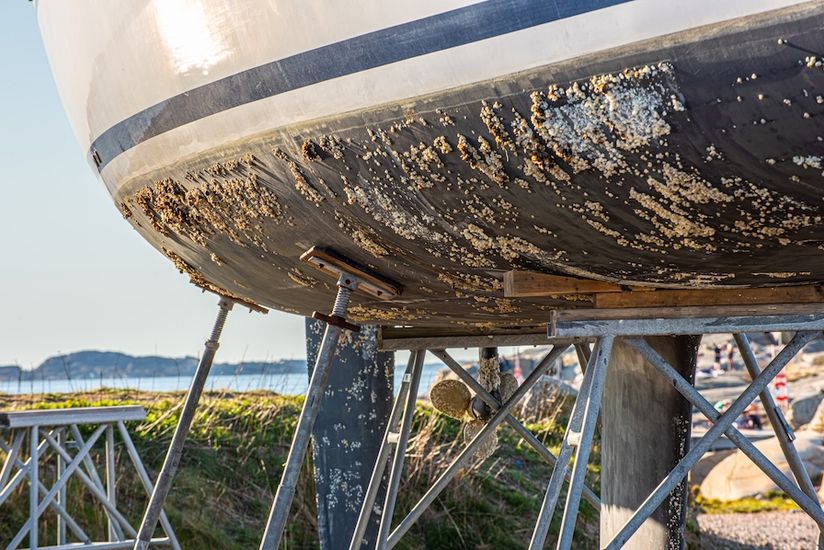
Let’s start by talking through the most popular choices of antifoul for boat owners today.
Q: For a dry-stacked or trailered powerboat, what’s the right antifoul?
Laurie: For anything that is dry-stacked or trailered, you want a hard antifoul. A hard antifoul is built on a tougher resin matrix. It’s not self-polishing and tolerates abrasion — lifting, towing, settling into mud or sand, and being winched in and out of racks. It’s the correct choice for boats that spend a lot of time out of the water.
A popular choice is Seajet 037.
Q: And for cruisers that live permanently in a marina?
Laurie: That’s where self-polishing antifoul comes into its own. Self-polishing coatings gradually erode as the boat moves, shedding growth and exposing fresh biocides. If the boat is permanently afloat — marina berth, swinging mooring, estuary — this is the best match.
Go-to choices:
● Seajet 033 Shogun
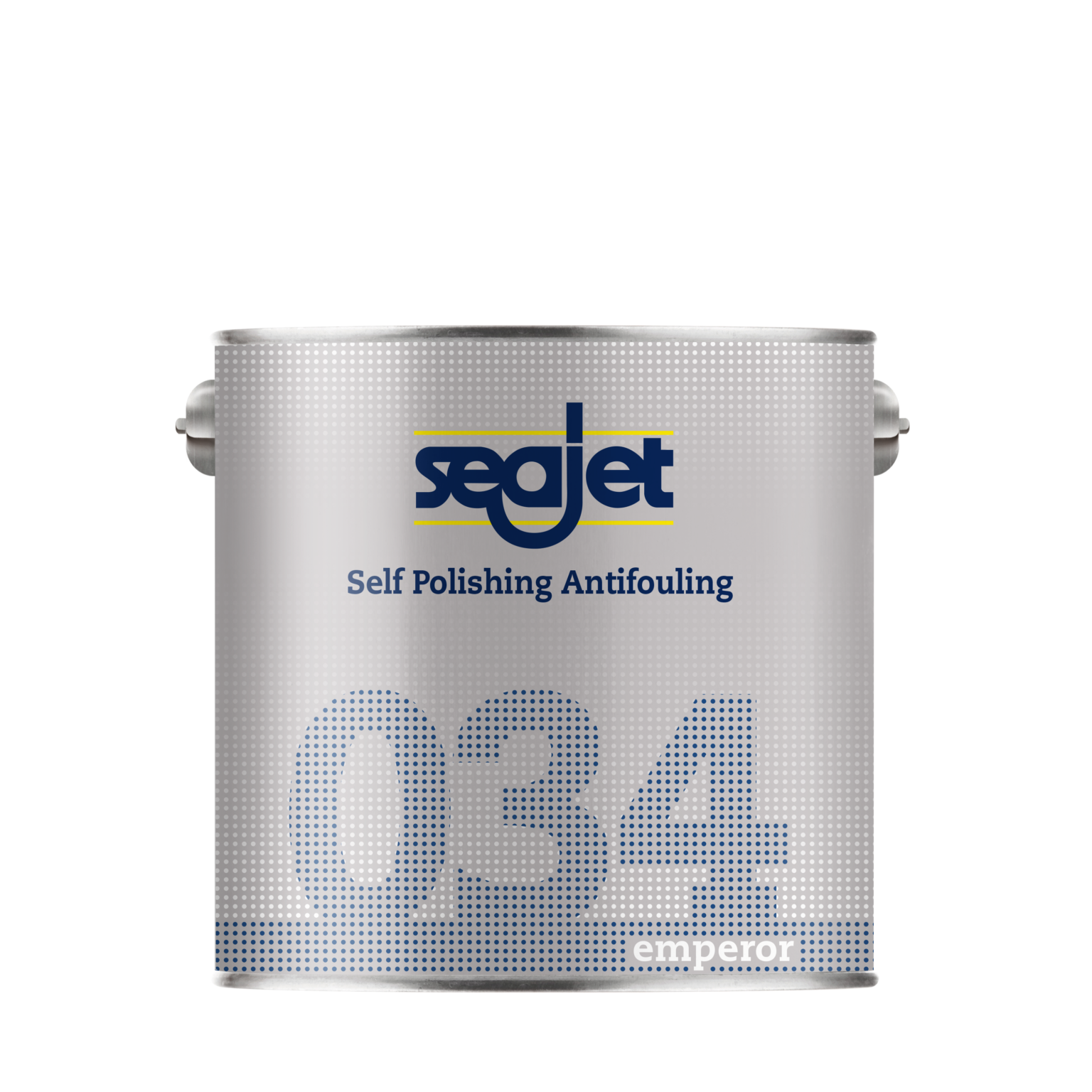
● Seajet 034 Emperor
034 Emperor, in particular, suits a lot of UK motorboats because its copper thiocyanate formulation makes it safe for aluminium (legitimate concern around
outdrives and transom shields). That’s a specific chemistry benefit, not a performance compromise.
Q: What about racing yachts?
Laurie: Racers want smoothness.
Seajet 034 Emperor again works well because it’s a tougher self-polisher and can be burnished. Owners can apply it and then wet-sand it to get a super-smooth finish and squeeze out that fraction of a knot. There are equivalents in other brands such as Hempel Hard Racing and International Ultra 300, but Seajet 034 is a reliable all-rounder. The 034 is available in White which remains white and doesn`t go blue/green as the copper leaches out.
Q: Are aluminium-safe antifouls weaker?
Laurie: No. The chemistry is simply different. Copper thiocyanate is aluminium-compatible and still extremely effective on hard-shell growth (barnacles, tube worm). The slime-fighting agents — the co-biocides — are what regulators focus on, not the copper form. So “aluminium-safe” doesn’t mean “less effective.”
Q: What are the biggest mistakes owners make when applying antifoul?
Laurie:
1. Poor PPE: Dry-sanding antifoul dust wearing a paper mask — or no mask —is dangerous.
Owners should use:
● A proper half-mask respirator with replaceable filters
● Full goggles, not safety specs
● Coveralls
● Gloves
Boatyards follow HSE rules. DIY owners often don’t due to cost or lack of insight to health problems the exposure can cause, particularly respiratory issues.
2. Bad preparation
Antifoul won’t bond if the hull isn’t keyed, clean and contaminant-free. Exactly like painting a front door — surface prep is everything.
3. Skipping primer or tie-coat
Primer adheres to the hull. Antifoul bonds chemically to the primer. If an owner doesn’t know what’s already on their hull, a tie-coat (e.g., Seajet 015
Underwater Primer, International Primocon) resets the surface and prevents incompatibility.
4. Using foam rollers
Foam rollers react with antifoul solvents and melt. Use short mohair or felt rollers. They give a clean finish on antifoul and epoxy.
5. Not applying enough product
Many owners under-apply. Minimum = two full coats, plus a third coat around the waterline/top 18 inches, which sees the fastest growth.
Q: How often should a marina-kept boat be stripped back to gelcoat or epoxy?
Laurie: A realistic interval is every 6–7 years, depending on use and how many layers have built up. Over time you get a “leached” resin layer after the biocides have gone. It’s dead film. That’s when stripping becomes necessary. If the hull has an epoxy barrier coat like Gelshield or Seajet 117, you strip back to the
epoxy — not the gelcoat — which protects the hull and makes future work easier.
Q: Why are familiar antifouls disappearing from chandlery
shelves?
Laurie: This is the impact of the Biocidal Products Regulation (BPR). Manufacturers across Europe — Seajet, International, Hempel, etc. — have been
required to alter formulations, remove certain co-biocides, or rename products to comply with updated approvals.
Examples across the market include:
● International Cruiser → Cruiser 200/250
● International Micron → Micron 300/350
● Seajet 034 → 034A (tiny reduction in co-biocides)
These aren’t marketing rebrands. They’re regulatory adjustments.
Q: Will DIY antifouling disappear?
Laurie: This is the question everyone asks — and nobody can answer definitively. Here’s the accurate, fact-checked position:
● Regulators are progressively tightening restrictions on certain biocides
● More products are being categorised as “professional use only” in some parts of Europe
● Some countries already require advice from a “competent person” at point of sale
● Manufacturers expect more pressure, not less
DIY antifouling isn’t banned in the UK. There is no published regulation saying it will end outright.
But the trend points towards:
● Weaker, copper-only DIY products
● High-performance coatings becoming pro-only
● A gradual shift toward safer chemistry and controlled application
That’s the honest, factually safe framing.
Q: Are silicone and eco-friendly antifouls growing in popularity?
Laurie: They’re growing in awareness, but adoption is still slow for these reasons:
1. They’re harder to apply
Silicone foul-release products have tight temperature and humidity windows. Under ~10°C, nothing adheres properly. Realistically, 12–18°C in dry conditions is safer.
2. They often require shed application
DIY owners usually don’t have controlled environments. Shed time = added cost.
3. Yards used to be hesitant
Silicone coatings turn the hull into a “bar of soap.” Years ago, some yards wouldn’t lift them. Today, most recognise this as the future and have adapted accordingly.
Product examples
- Seajet COO21 ECO / CO21 ECO-S (silicone foul-release; long-term)
- Seajet 021 Eko (biocide-free “soap-like” eroding coating; 1-season)
- Hempel Silic One (silicone foul-release system)
- International Intersleek (commercial-grade foul-release)
Silicone can last multiple seasons when applied correctly — but application accuracy is everything.
Q: What new antifoul products should boaters watch for?
Laurie: Manufacturers are preparing for the next phase of regulation. Expect:
● Evolved versions of silicone/foul-release systems
● More biocide-free options
● Higher-performance versions of existing eco lines
● Some pro-only formulations
Seajet and Hempel both have upcoming launches centred around foul-release chemistry, but like all manufacturers, they release details post-METSTRADE.
No brand is reporting mass-market adoption yet, largely due to application complexity — but the ramp-up is aggressive behind the scenes.
Final Thoughts
Thank you, Laurie for these valuable insights. Antifoul is changing — not overnight, but steadily. Chemistry is cleaner, regulations tighter, and boatyards are adapting their practices in response. Laurie’s key points highlight where the industry is now and where it’s heading: towards safer coatings, foul-release technology, and more oversight on how biocidal products are used.

About Laurie Brebner
Laurie Brebner is Southern Area Manager for Marine Industrial and a long-standing specialist in marine adhesives, sealants and coatings. With roots in marine engineering and decades supporting yards, surveyors and boat owners, he’s known for cutting through jargon and giving straight, technically robust guidance on product choice and best practice. His focus is simple: keep boats drier and better protected and use the right applications the first time.