From Voyage To Vision
Here's a sum most boat owners never do, because they know they won't like the answer. Add up what your boat costs you in a year — berthing, insurance, maintenance, the lot — and divide it by the number of weeks you actually sail. For most people that's a handful of weeks against a full year of bills. You're paying for the boat 52 weeks a year and using it for four. In any other purchase you'd call that madness. In boating, it's just how it's done.
My wife and I owned yacht shares for nearly ten years before we bought Yacht Fractions in 2024, so I've sat on both sides of this — as a broker now, and for years before that as an ordinary co-owner who moved a shared boat gradually east from Menorca to the Turkish coast and dealt with the odd syndicate headache along the way. I didn't buy the business and then talk myself into the model. It was the other way round.
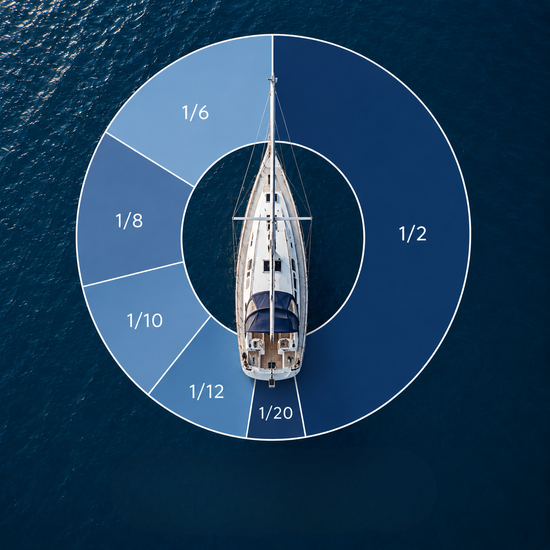
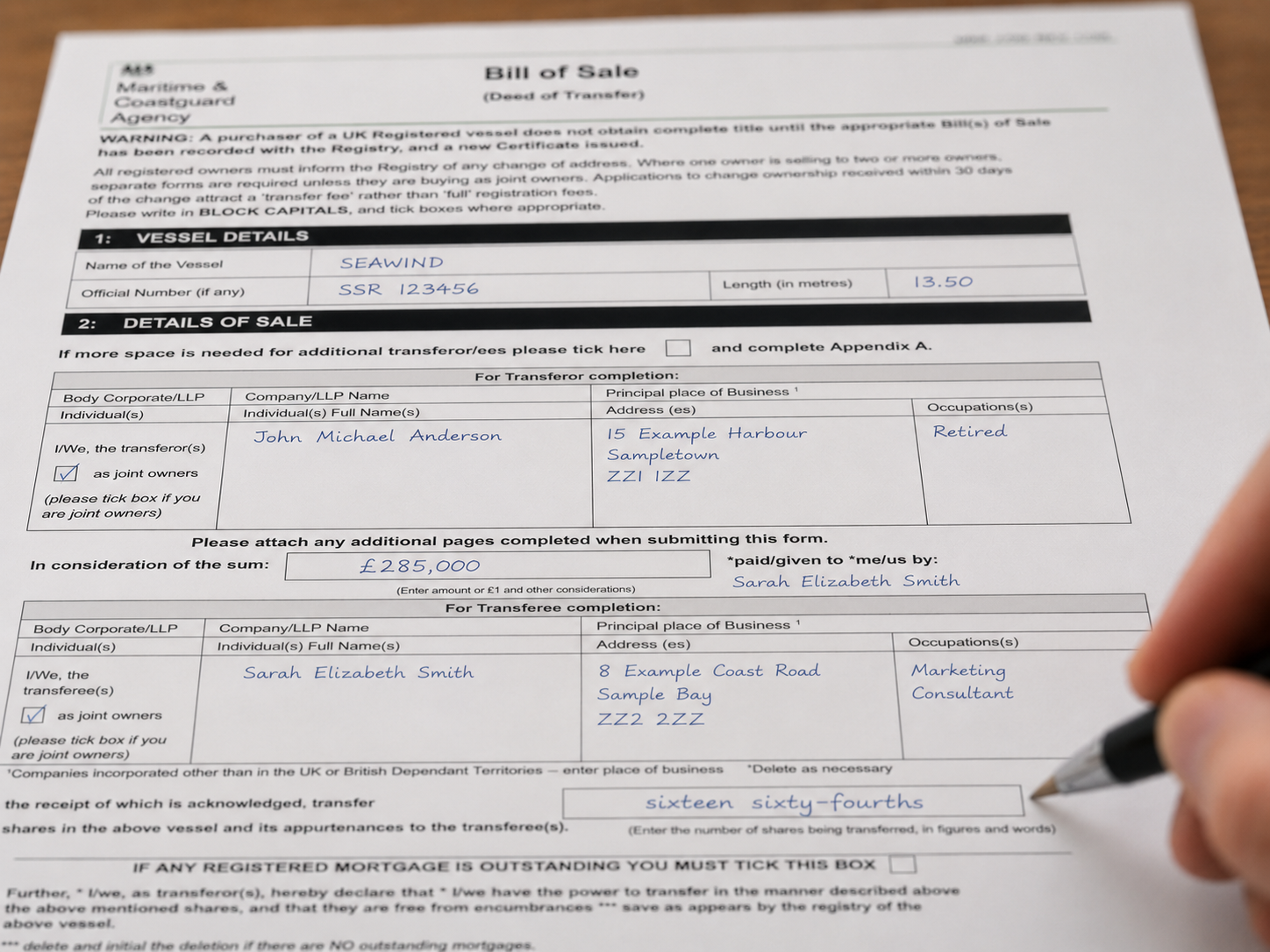
The idea is older than it sounds. Ships were traditionally sold in fractions of 64ths on the Bill of Sale, and shares changed hands all the time — that's where our name comes from. The modern version is simpler: you buy a quarter, an eighth or a twelfth of a yacht, you get that slice of the sailing season, and you pay that slice of the running costs. And unlike chartering, your money isn't gone. You own something you can sell when the time comes.
The Numbers
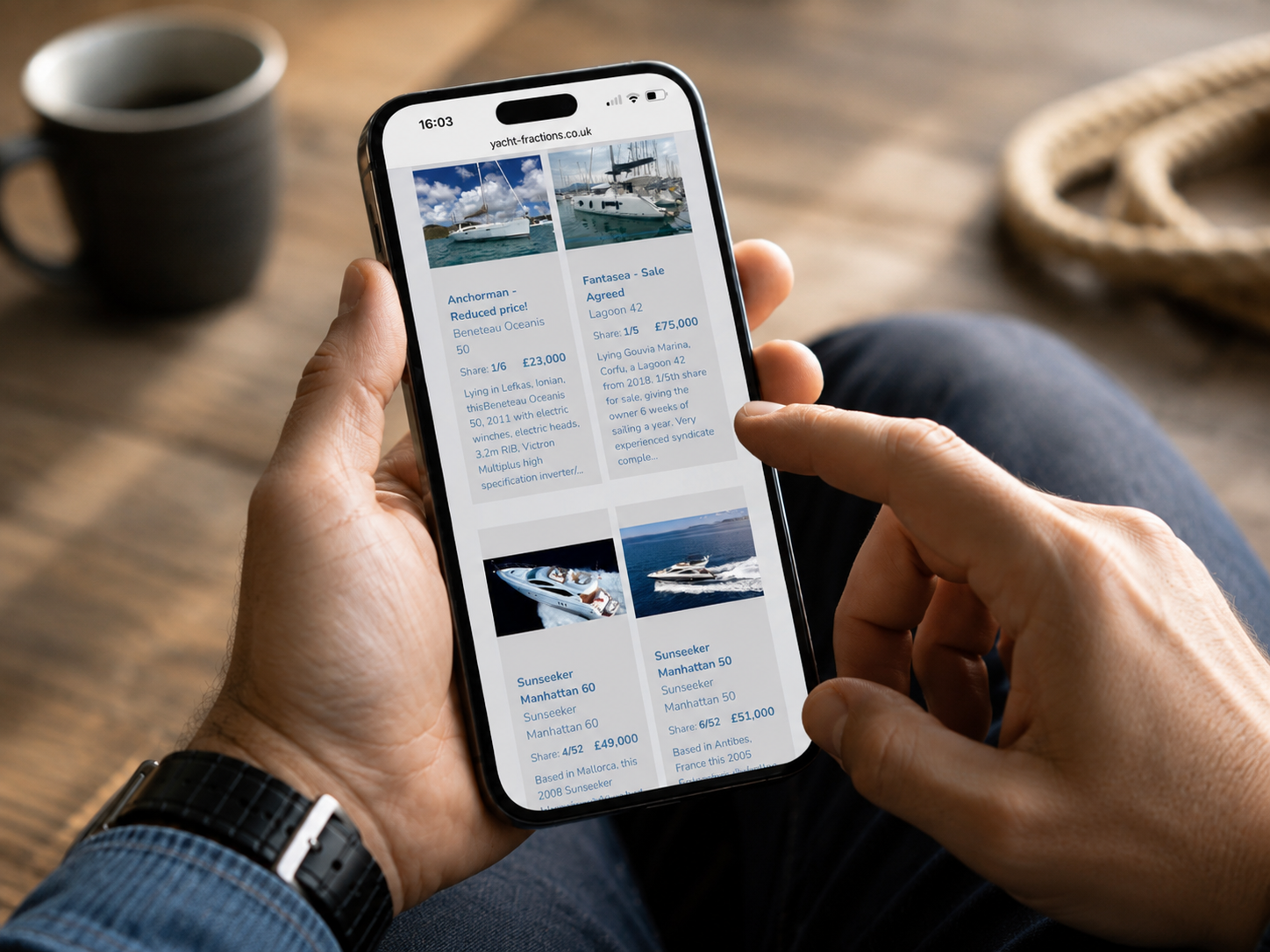
Compare it with chartering, because that's what most people would otherwise do. A quarter share of a 40-footer in Greece costs roughly £300 a month, that's £3,600 a year which gets you around six weeks of sailing. Chartering the same sort of boat in the same waters can cost £3,600 for one week. Same boat, same sea, six times the sailing for your money. The charter price has to cover the operator's overheads, their profit, and all the weeks the boat sits earning nothing. A shared boat has no idle weeks to pay for — every week belongs to one of the owners. At the smaller end, the entry cost is remarkably low. We recently sold a 1/14th share of a Bavaria 42 for £5,000 — it went almost immediately — with running costs of about £120 a month for two weeks of Ionian sailing a year. Buy outright for £5,000 and you'll get a tired 1970s boat and every one of its bills landing on your doormat alone. The share gets you a proper, maintained 42-footer and a fraction of the costs.
Which share suits you, comes down to two things: your budget, and how much time you can realistically take. Six weeks a year tends to suit people at or near retirement or from self-employed people who are not tied to a holiday entitlement. A twelfth share, giving two to three weeks, fits neatly around a full-time job. Location shifts the sums too: Spain's season is longer than Greece's, so an eighth share there delivers what a quarter does in the Ionian. Around 80% of our boats are in the Ionian, which tells you where this works best.
The Third Option
Walk through any marina, here or in the Med, and you'll see boats that haven't moved in years. Their owners are paying full berthing and maintenance on boats that are quietly deteriorating — because a boat that isn't used degrades faster than one that is. I find it genuinely sad. Most owners in that position think they have two choices: keep bleeding money, or sell up and walk away from sailing altogether. There's a third: sell shares in your own boat. Sell three quarter-shares and keep one, and you get most of your capital back, cut your running costs by three-quarters, and your boat goes back to being sailed — which is what keeps it in good condition. We handled exactly this early on: a Beneteau Oceanis owner sold down to a share, carried on sailing for a couple of years, and when he eventually needed out completely, his remaining share sold on without difficulty. One warning, and I give it to every seller in that position: the moment you sell shares, it stops being your boat. It becomes a partnership. The wrong mindset can cause problems amongst the owners. Get the mindset right and it works very well indeed.
What About When Things Don't Go To Plan?
Everyone raises the same worries: what if a co-owner won't pay for repairs, or wants the same weeks I do, or breaks something? Fair questions, and I won't pretend these things never happen. They occasionally do, and this is where we do more than broker the sale. At Yacht Fractions we've spent years advising owners on how to run a happy syndicate, and it starts with a proper owners' agreement, which we provide and keep refining based on real experience. It sets out how decisions get made, how sailing time is shared, how money gets spent, and who does what: for instance, one owner typically handles the accounts, another the paperwork. Day-to-day, the syndicate runs the boat itself, which keeps everyone's costs down.
If things do go wrong, which is very rare, we offer guidance on dispute resolution and, just as importantly, on what it means to be a considerate co-owner in the first place. Because that's the real secret: most disputes never happen when everyone goes in with the right mindset. Treat the boat as shared, communicate early, leave it as you'd want to find it. And when something does go awry, a defined process beats a row every time. In one of my own syndicates, a co-owner grounded the boat and damaged the rudder. Insurance covered the repair, I lost a week of my slot, and the agreement smoothed it over — an extra week the following season, no fallout, no hard feelings.
The agreement also covers the trickier scenarios fairly: if a piece of kit keeps failing through one person's misuse, the cost gradually shifts to them rather than the group, and if an owner's circumstances change and they can no longer pay their way — genuinely rare — the fairest outcome for everyone, including them, is usually to sell their share and recover their capital. Nobody's trapped, and nobody's left carrying someone else's costs.
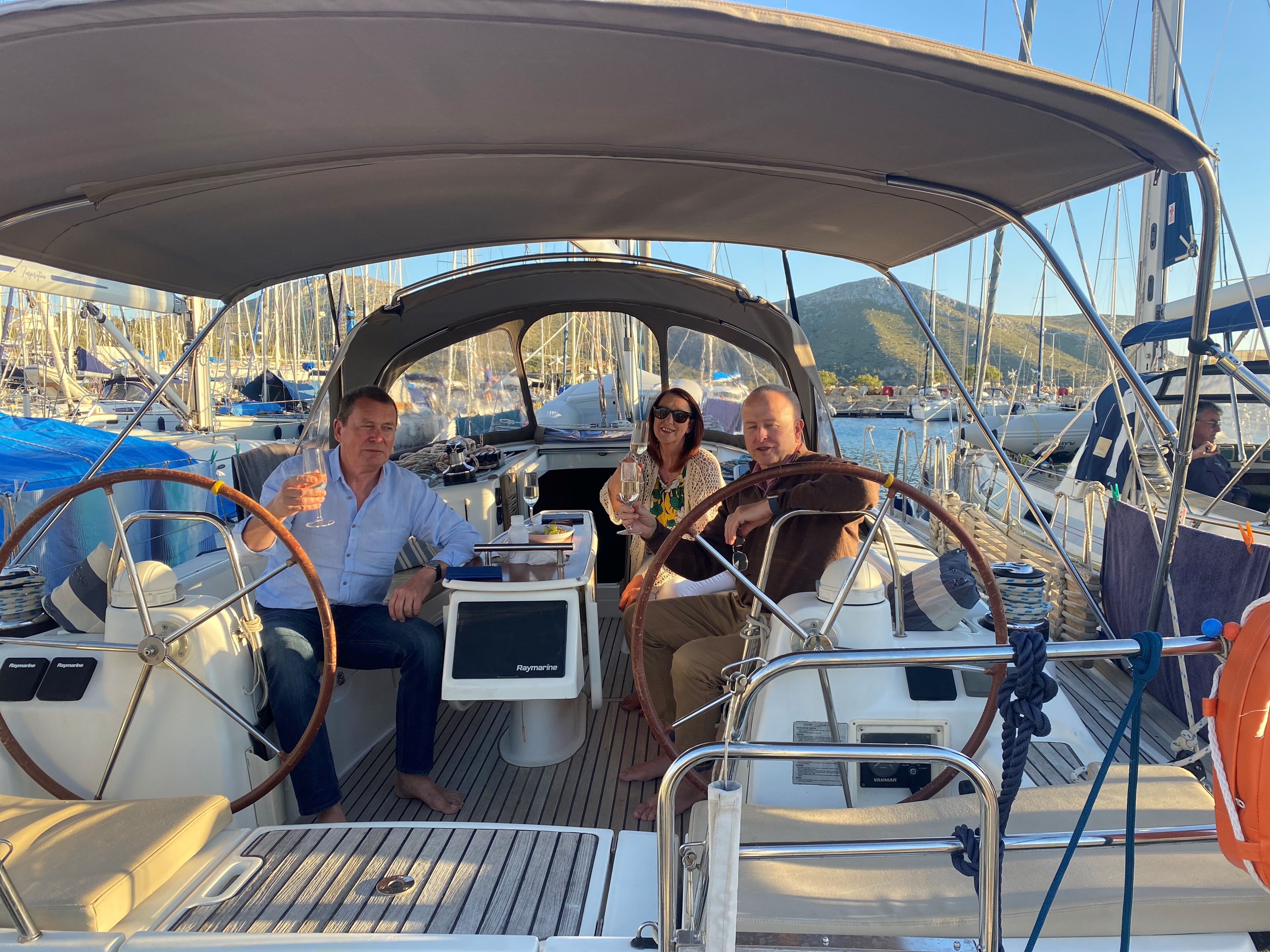
The syndicates that last — and plenty run for a decade or more — get one thing right at the start: the people. New buyers need approval from the existing owners, and what they're looking for isn't friendship, it's alignment: the same willingness to spend money keeping the boat right, the same vision for where it sails. In our Menorca-to-Turkey syndicate we were clear that anyone wanting to stay put in one cruising ground wouldn't have been the right fit, however nice they were. You don't have to be friends with your co-owners, though we've become friends with some of them. You just have to be able to make decisions together, and we help buyers and sellers alike get that match right from day one.
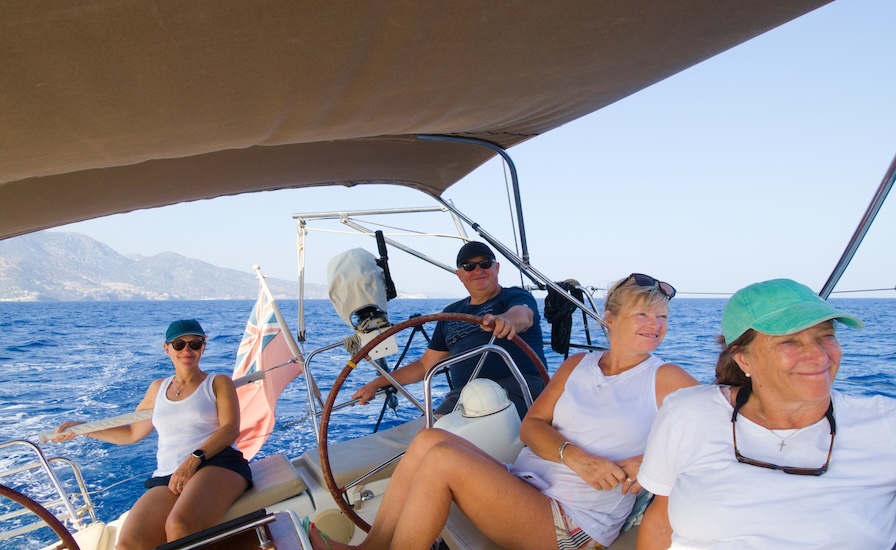
Share The Costs, Own The Experience
Owning a whole boat means paying for all of it while using a fraction of it. Owning a fraction means paying for what you actually use, and still holding something you can sell. Whether you're trying to get on the water without spending a fortune, or trying to stay on it without the bills sinking you, this isn't a cut-price version of ownership. It's smart ownership with the waste taken out — and after a decade of sailing shared boats myself, I wouldn't do it any other way.
Check out Yacht Fractions and shared ownership boats on offer here
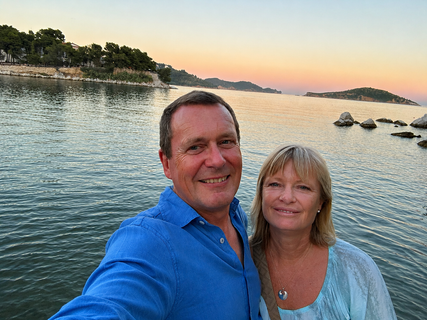
About Denis Lyons
Denis is Co-director of Yacht Fractions, the shared yacht ownership brokerage founded in 1991. He and his wife Pip owned yacht shares for nearly a decade — sailing from Menorca to the Turkish coast — before buying the business in 2024. Customers turned owners, they write from experience on both sides of the deal.